
Posted by Eva Linares on Linked
on 10 March 2026,
Why anticipating electricity capacity is becoming a strategic priority
There’s a very common scenario when you’re travelling by car and decide not to book a hotel.
You want the freedom to choose as you go along, so you drive along calmly, thinking that when the time comes, you’ll find a room without any trouble.
Није врхунац сезоне. Нема конференција. Има десетине хотела.
So you book late. Or even on the day itself.
And when you arrive in the city… everything is full.
If you’re the sort who plans ahead, this has probably never happened to you.
But if you’ve ever improvised a trip, you know the feeling: stress, uncertainty and the uncomfortable question of what to do now.
Нешто слично почиње да се дешава са електричном енергијом.
And with energy cost optimisation too.
Енергија постаје ствар приступа, а не само цене
Годинама се разговор о енергији у компанијама врти око једног питања:
„По којој цени купујемо енергију?“
But now another question is beginning to emerge, one that until recently seemed unlikely:
„Хоће ли бити капацитета да нас повежу када нам затреба?“
According to data published by Red Eléctrica, only 25% of connection points on the transmission grid currently have available capacity for new demand.
In other words: three out of every four ‘sockets’ on the grid are already saturated.
И ово не утиче само на нове индустрије.
It affects expansions, new production facilities, data centres and urban developments.
And, of course, it could also affect your business.
A problem that almost no one sees
The electricity grid has a peculiarity.
When it starts to become saturated, you don’t notice it.
When it is saturated, you don’t notice it.
There are no visible queues.
Нема црвених светала.
There is no clear sign indicating that the system is reaching its limit.
Ипак, утицај може бити огроман.
You surely remember last year’s major blackout; it arrived without warning and faded from our memory. No one saw it coming.
According to energy analysts themselves, a grid collapse can delay the establishment of new industries or strategic investments for years.
Другим речима: проблем се не појављује на рачуну.
It appears when your company wants to grow.
When energy ceases to be a purchasing item
In many management committees, energy is still treated as a purchasing department item.
The price is negotiated, the contract is signed, and the matter is filed away as ‘resolved’.
But when the infrastructure starts to become overloaded, that approach is no longer enough.
Because it is no longer just about how much energy costs.
It is about whether you will be able to access it when your business needs it.
И у том тренутку, енергија престаје да буде оперативно питање.
То постаје стратешка одлука.
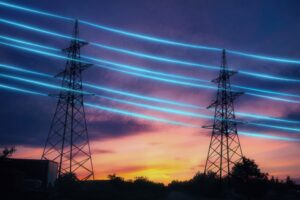
Када сви желе исту собу
The problem isn’t a lack of electricity.
У ствари, Шпанија обара рекорде у производњи обновљиве енергије.
The real problem is this: whilst more and more energy is being produced, the grid that must transport it isn’t growing at the same pace.
By 2024, around 8% of the renewable energy generated was already being wasted, and by 2025 that figure had doubled.
Meanwhile, new industries wait years to get connected – that plug they need to start operating.
То је као град пун хотела... али са врло мало слободних соба.
The difference between planning and being late
When you travel to a city hosting a major event, there are two types of travellers.
Они који резервишу месецима унапред.
And those who turn up thinking that, somehow, they’ll find something.
In the energy sector, unfortunately, there are still many companies that operate like those second types of travellers.
Companies that anticipate what they will need in the future—whether new plants, expansions or process electrification—have more scope to secure that desired connection.
Those that wait until the last minute face a problem that does not depend on price.
То зависи од расположивог капацитета у мрежи.

The questions a CEO should start asking
If your company relies on electricity to grow, to run processes or expand production, it might be worth starting to ask yourself some questions:
- Да ли имамо обезбеђене електричне капацитете за наше планове раста?
- Да ли предвиђамо потребе за повезивањем са довољном маргином?
- Are we treating energy as an operational risk or merely as a purchase?
- Да ли знамо како би двогодишње или трогодишње одлагање нове везе утицало на наше пословање?
Јер једна ствар мора бити јасна:
the electricity grid is not an unlimited resource.
The problem isn’t paying more for electricity
The strategic mistake rarely lies in paying a few cents more per kilowatt.
The real mistake is usually realising too late that there is no capacity available when your company needs to grow.
А онда проблем више није цена.
The problem is that there is no socket.
And at that point, there is no choice but to wait for capacity to become available on the grid.
Нешто што може трајати годинама.

Planning ahead or relying on luck
By now, I am sure that your company does not want to rely on luck.
Companies that plan their grid access in advance have room for manoeuvre.
Они који не зависе само од доступности система.
Јер управљање трошковима је једна ствар.
А управљање неизвесношћу је сасвим друга ствар.
If you’d like to analyse your company’s exposure to this problem and what options exist to anticipate it, we can look into it together.
Because in energy, getting there first often makes all the difference.
Хвала вам што сте читали још једну недељу.
Have a lovely day.