



Will your brand survive or will it win?Translated into Spanish from the article originally published on the Monte e Freitas website
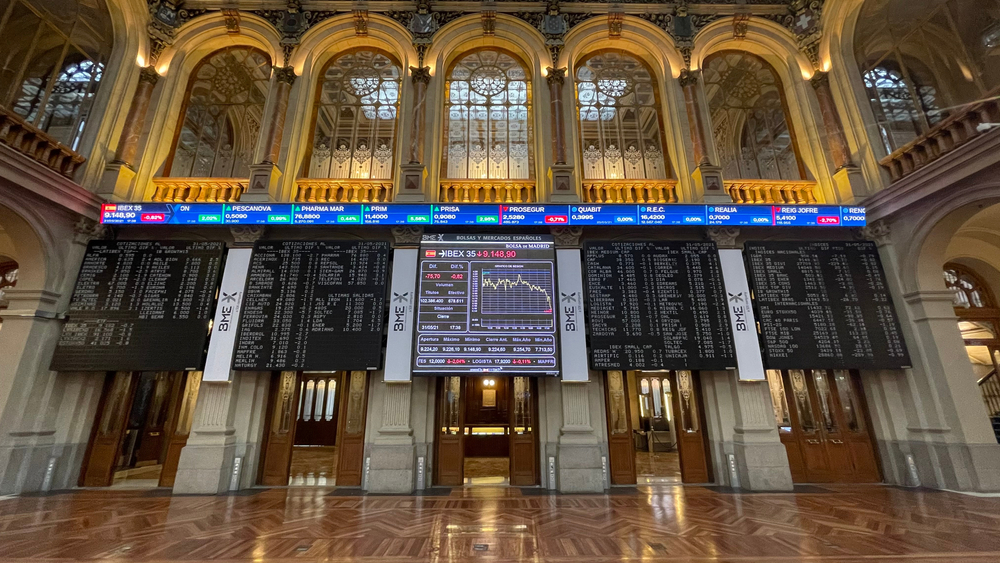
After several attempts at how to start this article, and given that there is no truly pleasant way to approach the subject, I think it’s best to get straight to the point. From last year to this, volatility has ceased to be the exception and has become the norm. Retail and distribution are facing growing pressures. The dreaded tariffs are having a lasting impact, supply chains are unstable, consumers are exhausted by the rising cost of living, and margins are increasingly squeezed.
The data is clear: according to recent international studies, the 2025 tariffs have driven up prices for imported goods (by more than 1%, according to the Bank of Portugal) and even for domestic goods in import-intensive sectors. So far, only one-fifth of this impact has been passed on to the consumer. The rest is being absorbed by suppliers and distributors, squeezing profitability and undermining investment capacity. In other words, entire sectors are in survival mode and not focused on making a profit.
The reality is not encouraging, but it has been condensed into a single paragraph. I dedicate the following to solutions, because there is no point in lamenting. Faced with this scenario, the recurring question I am asked is: how can we reduce costs? However, the question should be a different one: how can we build structured, permanent, and margin-generating resilience?

Ako? Tak sa do toho pustime.
The answer lies in completely rethinking how cross-functional costs are managed. It’s not about making “blind” cuts, but about freeing up internal resources so teams can focus on what matters most: generating value at the core of the business. When companies continue to manage dozens of non-strategic categories on a daily basis—such as energy, maintenance, logistics, supplies, telecommunications, and many others—they lose focus, time, execution capacity, and, at the end of the day, growth and revenue.
Our daily experience in the field tells us that many organizations operate with structures and processes that no longer reflect current demands. Contract review cycles are too long, suppliers are not the most qualified, and visibility into actual costs by category is often limited. In the current context, we recommend shorter renegotiation cycles, greater monitoring of cost drift, and a more granular approach to risk. The reality in a nutshell: most companies continue to operate using outdated models and are losing efficiency and money with each passing day.
Today, reducing costs intelligently means rigorously mapping exposure to rates and external volatility—something many retailers still do not do with the necessary level of detail. It means renegotiating based on data, not on perceptions or outdated historical data. Diversifying suppliers, not only geographically but also in terms of operational risk. Integrating systems that enable real-time visibility, essential for adjusting margins and prices in shorter cycles and transforming supplier management into a continuous discipline rather than a purely reactive one.
Despite all this, as I often say, the crucial point is this: when companies delegate the management of cross-functional categories, they free up tens, hundreds, or, in some cases, even thousands of internal hours per month. Time that should be directed and focused on the customer, on innovation, and on differentiation.
In a year expected to be marked by more price-sensitive consumers, persistent inflationary pressures, and unpredictable trade policies, it will be resilience and strategic focus—and not just cost reduction—that will distinguish the winners from the survivors.