



5 Supply Chain Management Trends to Watch in 2026Translated into Spanish from the original English: "5 supply chain management trends to watch in 2026"
Supply chain uncertainty isn’t going away in 2026, but after a year of massive changes—especially in global trade—companies are in a stronger position to face the challenges ahead.
Driven largely by tariffs and new regulatory frameworks, retailers and manufacturers who were forced to react in 2025 have adapted, paving the way for bigger and bolder moves this year, experts told Supply Chain Dive.
“I think there was a lot of waiting and watching, but that seems to be coming to an end. I see companies ready to drive change again,” said Dustin Burke, co-leader of manufacturing and supply chain at Boston Consulting Group.
However, being prepared does not mean that companies will not encounter turbulence over the next 12 months. The global trade landscape continues to shift, the economic situation remains uncertain, and logistical challenges continue to spread.
“The winners in 2026 will truly be those who recognize that critical decision points and inflection points are occurring, identify them early, and are able to translate them into actions to rapidly reconfigure their operations,” said Per Hong, global head of Kearney Foresight and a partner in Kearney’s Strategic Operations and Performance practice.
With the increase in geopolitical turmoil already underway this year, below are the key trends and risks that supply chain leaders should expect to encounter in 2026.

- 1. Geopolitical risks will drive fragmentation and diversification
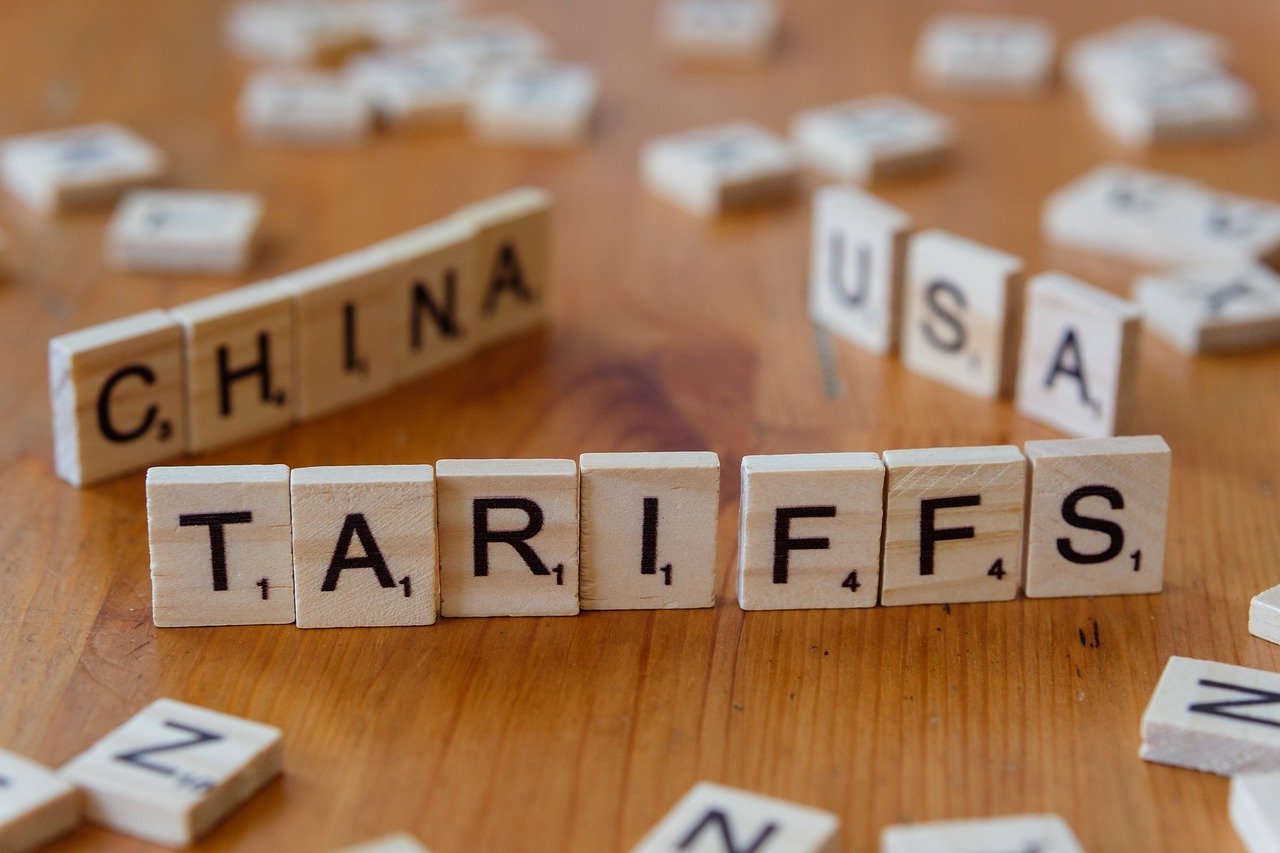
- U.S. President Donald Trump’s broad tariff regime will continue to test supply chains in 2026. Although the pending Supreme Court decision on Trump’s authority to impose tariffs could undermine the current order, the White House has implemented numerous sector-specific tariffs and consolidated others through various trade agreements.
- “We will continue to see some volatility and risk related to tariff structures, which influences how companies approach trade and perhaps even their business models.”
- “We will continue to see some volatility and risk related to tariff structures, which influences how companies approach trade and may hinder planning for more structural and long-term shifts in supply chains,” Burke explained.
- In the face of this persistent volatility, companies will continue to rely on more short-term tactics to mitigate the impact of tariff changes, according to several experts consulted by Supply Chain Dive.
- “It makes more sense for me to plan in six-month blocks, because people change their minds,” said Suketu Gandhi, partner and global head of strategic operations and performance at Kearney. “Leaders seem to change their minds every day. I can’t run my business that way.”
- One tactic companies used in 2025 was to move up shipments before tariffs took effect to maintain solid inventory levels. Although ports like Los Angeles expect volume declines this year compared to some peaks resulting from that advance in 2025, no significant drop is anticipated.
- “I think we’ll see a normalization of the situation in 2026 and perhaps a return to more typical inventory flows,” said Jess Dankert, vice president of supply chain at the Retail Industry Leaders Association.
- Beyond tariffs, companies must also contend with evolving geopolitical risks, especially as the Trump administration employs increasingly aggressive tactics to advance its international ambitions.
- Meanwhile, the review of the United States-Mexico-Canada Agreement scheduled for this summer will be a critical turning point for the supply chains of all three countries, according to Hong. He added that the revised agreement and other fragmented trade pacts around the world will further fragment the global economy.
- “Companies and countries will have to operate not within a large trade bloc, but within sub-branched or bilateral agreements, which creates greater levels of complexity for companies in general,” Hong explained.
- In this context, companies will reassess their relationships with suppliers, their viability, and visibility across their networks, while others will focus on further diversifying or regionalizing their supply chains, according to experts.

- 2. Economic Turbulence Will Put Supply Chains to the Test
Consumer spending remained resilient in 2025, but is expected to slow this year as affordability concerns and a weaker labor market put pressure on shoppers’ wallets, according to a Moody’s report published in December.
Continued pressure on consumers will test supply chains in 2026 in terms of planning and pricing, both for retailers and consumer goods companies and for upstream sectors such as packaging and chemicals, according to Burke.
The sluggish housing market is also expected to continue having a ripple effect on supply chains in 2026, according to Rick Jordon, senior director and co-leader of business transformation in the U.S. at FTI Consulting. Beyond the impact on raw materials like wood, fewer homes under construction means less demand for furniture, sinks, and other household goods, affecting manufacturers of these products.
Companies could also feel the impact of their suppliers’ deteriorating financial performance as overall debt levels continue to rise, according to Hong.
“It’s less about a one-off debt crisis and more about how I manage my overall viability,” Hong said, encouraging companies to stress-test their suppliers against refinancing risks, redesign inventory strategies based on payment terms, and diversify away from fragile logistics corridors.

- 3. Cost optimization will be a key priority
- With persistent uncertainty driven by fluctuating trade and economic factors, costs are expected to rise, forcing companies to prioritize cost optimization in their supply chains more than usual in 2026, according to experts.
- For example, Burke predicts that many companies will optimize their global manufacturing and distribution networks to offset underutilized capacities that are no longer cost-competitive. This could lead to measures such as plant closures and the consolidation of distribution networks.
- In the distribution sector, companies may also become more interested in reviewing the geographic footprint of their networks, as well as transportation costs as rates fluctuate, according to Matt Stekier, a director at Plante Moran.
- “The cost of transportation is like car insurance: you should shop around every two years, because if you don’t, you’re probably paying more than you need to,” Stekier said.
- Modal flexibility will also be a key tool for maintaining supply chain resilience next year, wrote Mike Short, president of global transportation at C.H. Robinson Worldwide, in an article published in November.
- “You have to be prepared to switch between ocean, air, and other modes, including exploring sea-air combinations and LCL consolidation strategies, as market conditions change,” wrote Short.

- 4. Enthusiasm for AI Will Level Off
Every industry continues to pursue the promise of artificial intelligence, but 2026 will likely be a turning point for the future of this technology in the supply chain. Experts say that many companies have not yet achieved the immediate, large-scale impact they expected from their AI investments, leading executives to recalibrate timelines and expectations.
“We’re seeing supply chains become a bit more self-regulating, where AI predicts disruptions, optimizes flows, and, hopefully, automates planning,” said Abe Eshkenazi, CEO of the Association for Supply Chain Management, adding: “The unfortunate part is that, although investment in AI is significant, the return on investment isn’t there yet.”
Readjusting expectations will not prevent companies from continuing to experiment and drive the deployment of AI in their operations, according to Gandhi, who cites the technology’s cost reduction and the rapid pace of innovation in the sector as key factors.
Agent-based AI is emerging as a particularly attractive technology in the supply chain sector, given its applications in demand planning, forecasting, and decision-making, Burke noted.
Meanwhile, generative AI is also spreading throughout the supply chain industry, with 91% of mid-sized manufacturers using it to some extent, according to a report by West Monroe.
However, supply chains are still in the early stages of utilizing these tools and realizing their potential benefits.
“The operational model underpinning the supply chain is not evolving nearly as fast as the technology, and that is going to create a breaking point,” Hong warned.
By 2026, companies will focus on scaling AI responsibly, building the databases, workforce skills, and governance frameworks needed to move from experimentation to measurable results at scale, according to the West Monroe report.

- 5. Companies Will Face Challenges in the Supply Chain Workforce
From the production floor to the boardroom, the supply chain workforce will continue to undergo profound change in 2026, as companies grapple with an aging leadership, labor shortages, and the need to bring in new skills.
Ongoing investments in AI and automation, coupled with staffing constraints resulting from immigration regulations, are creating a significant divergence in labor availability, costs, and productivity, which will pose a fundamental challenge for supply chains in 2026, according to Hong.
“For supply chain leaders, the workforce is no longer a stable factor,” he said. “It is truly a strategic constraint.”
Faced with these labor challenges, companies are trying to make their processes as efficient as possible, with increasing investment in system automation, Stekier noted.
Companies will continue to prioritize talent development and retention, as well as training employees to optimize production alongside new technologies such as AI. However, finding workers with AI expertise and providing adequate training remains a challenge.
“You have very powerful systems with talent that doesn’t understand, think critically, or solve problems with the data coming in and out,” concluded Eshkenazi. “What we advocate is that investment in talent be proportional to investment in technology.”