
In most manufacturing companies; the use of automation in production is absolutely commonplace. Whether it is an automatic process in CNC machining; a robot for stacking printed materials onto pallets; or a robotic welding arm on advanced production lines in the automotive industry. The principle of replacing manual human labour is therefore commonplace.
Unfortunately; significantly fewer companies are currently using this principle in their administrative processes. Can you imagine replacing manual work performed by an accountant with a software robot that can perform the manual tasks; allowing the accountant to focus their attention on analyzing accounting data and preparing outputs for management; thereby improving the basis for effective company management?
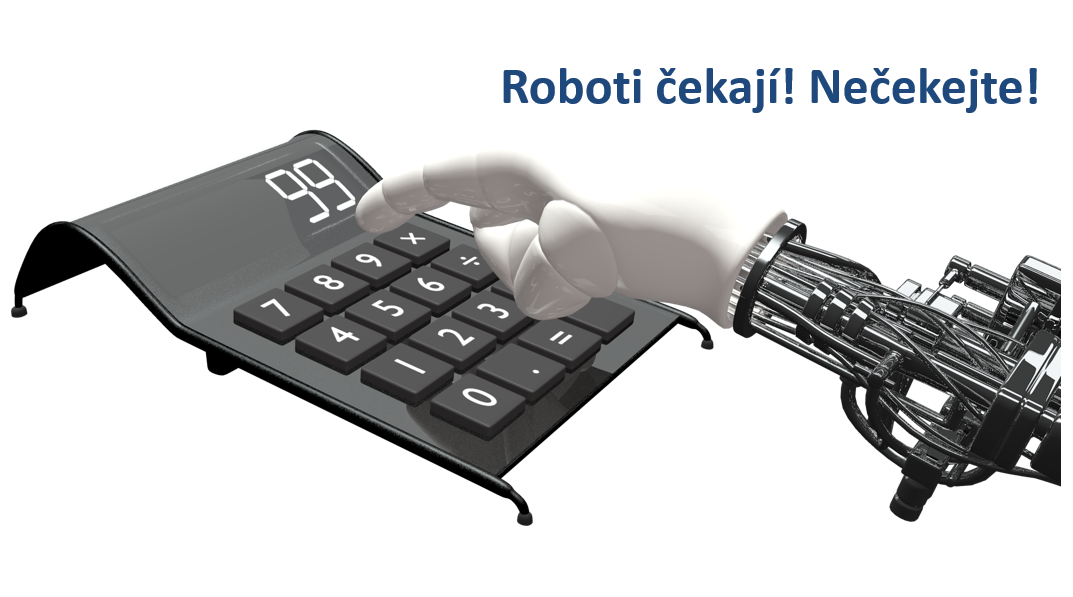
Replacing manual work in administration is possible and; moreover; very effective. Currently; there are already several major software platforms that enable the relatively simple introduction of robotic automation of administrative processes into the corporate environment.
According to research by Deloitte; robotic process automation has already increased efficiency in 95% of surveyed companies worldwide. In the Czech Republic; this figure is currently lower – 74%. However; it is expected that the adoption of administrative process automation will increase very rapidly.
What are the advantages of robotic process automation?
- The introduction of automation has a direct impact on the efficiency of processes within a company.
- Software robots make fewer mistakes than humans and can work 24/7.
- Automation can address the current labour shortage.
- Software robots can also connect seemingly unconnectable IT systems and significantly improve the integration of companies newly incorporated into group structures.
What can be an obstacle to the use of robotic process automation?
- Inconsistency or fragmentation of administrative processes; or their insufficient description
- Lack of a clear vision in the area of administrative process automation
- Insufficient readiness of internal IT resources for the implementation of robotic process automation

How can these obstacles be overcome and the opportunities and potential of robots be exploited?
One of the most important components of successfully introducing robotic process automation is "selling" the idea to the entire company. Robotic process automation; like automation in manufacturing; may be perceived negatively in the initial phase. It is therefore important to properly explain to everyone involved why the company is pursuing this approach and what the goal is. It is clear that the goal is not to actually replace human labour; but to make it more efficient and transfer it to areas where creativity is needed. The next step is to correctly identify the processes to be automated and test that the processes can actually be automated. It is best to select one as a pilot project and use it to test that everything works and the expected results are achieved. It is therefore not possible to start with a complex; strategic process spanning several departments of the company. This usually results in a long implementation time and a loss of confidence in such a solution. If there is no internal employee in the company who would be responsible for robotic process automation and who would be enthusiastic about this approach; it is worth engaging an external company that has the right resources; an overview of the market and can not only help with the identification of processes for automation; but also with the creation of an internal team that will further develop the principle of automation in the company.