

- When the retail flight has already landed, but the cost journey continues to take its toll
- Why January is when many companies discover how much the sales campaign actually cost.You’ve just returned from a big trip.
For weeks, you’ve been on the go nonstop: flights, hotels, taxis, restaurants, tickets, extra luggage… it was all part of the adventure.
But it’s not until you get home, sit down calmly, and review your credit card charges that the big surprise hits:
Did it really cost that much?
Something similar happens every year at many companies in the retail sector.
During peak periods like Black Friday, Christmas, or intensive sales campaigns, the entire focus is on selling, fulfilling orders, and keeping operations running.
But the true impact becomes clear when it’s all over and the full cost of the campaign is finally revealed.
And that moment usually comes in January.
According to a report by ERA Group, the start of the year isn’t usually a quiet period after the sales peak. In fact, it’s when many of the costs that went unnoticed during the campaign begin to surface.
That’s why it’s important to reach January without those “hidden” charges.
And the best way to do that is to start looking at them before the campaign ends.

- The baggage you didn’t know you’d checked in
When a company emerges from a period of peak activity, it often feels like it has optimized everything possible.
You know:
- Contracts are negotiated.
- Suppliers are streamlined.
- Processes are defined.
- But experience shows that profit margins are lost on a single major decision.
- It’s lost in the small expenses that go unnoticed.
- Because, in reality, companies usually have the major cost items under control.
- The problem lies in the details.
- For example, when:
- a supplier slightly adjusts its rates;
- a contract that automatically renews with new terms.
- a service that remains active even though it is no longer used.
- This happens more often than it seems.
- Software licenses with more users than necessary.
- Phone lines that remain active even though the team is no longer that large.
- Services contracted for a period of growth that has already passed.
- And that’s how costs get left behind without anyone noticing.
- These kinds of leaks are more common than they seem because, during peak periods, organizations prioritize speed and efficiency.
- It makes sense.
- When you’re rushing to catch your flight, sometimes you don’t even look at the card reader the taxi driver shoves in your face.

- The second wave of the journey: when returns begin
There is another phenomenon that explains why January becomes a difficult month for margins: returns.
In markets like the United States, merchandise returns are estimated to have reached around $850 billion in 2025.
While November and December are dominated by shipments and sales, January becomes the month of returns.
And that implies something that is often underestimated.
Returns aren’t just a customer service issue.
They also involve:
- logistics
- warehouse handling
- additional shipping
- In short, these are operating costs that someone has to absorb..
- And all of this is happening just as companies are trying to reset their inventory, cash flow, and planning after the peak in activity.
- In my traveler’s terms, I’d say it’s like realizing that, after a long trip, you still have to unpack your entire suitcase, wash your clothes, and reorganize everything before getting back into your routine.
- The trip is over.
- But the work isn’t done yet.

- How the retail logistics landscape is changing faster than many operational models
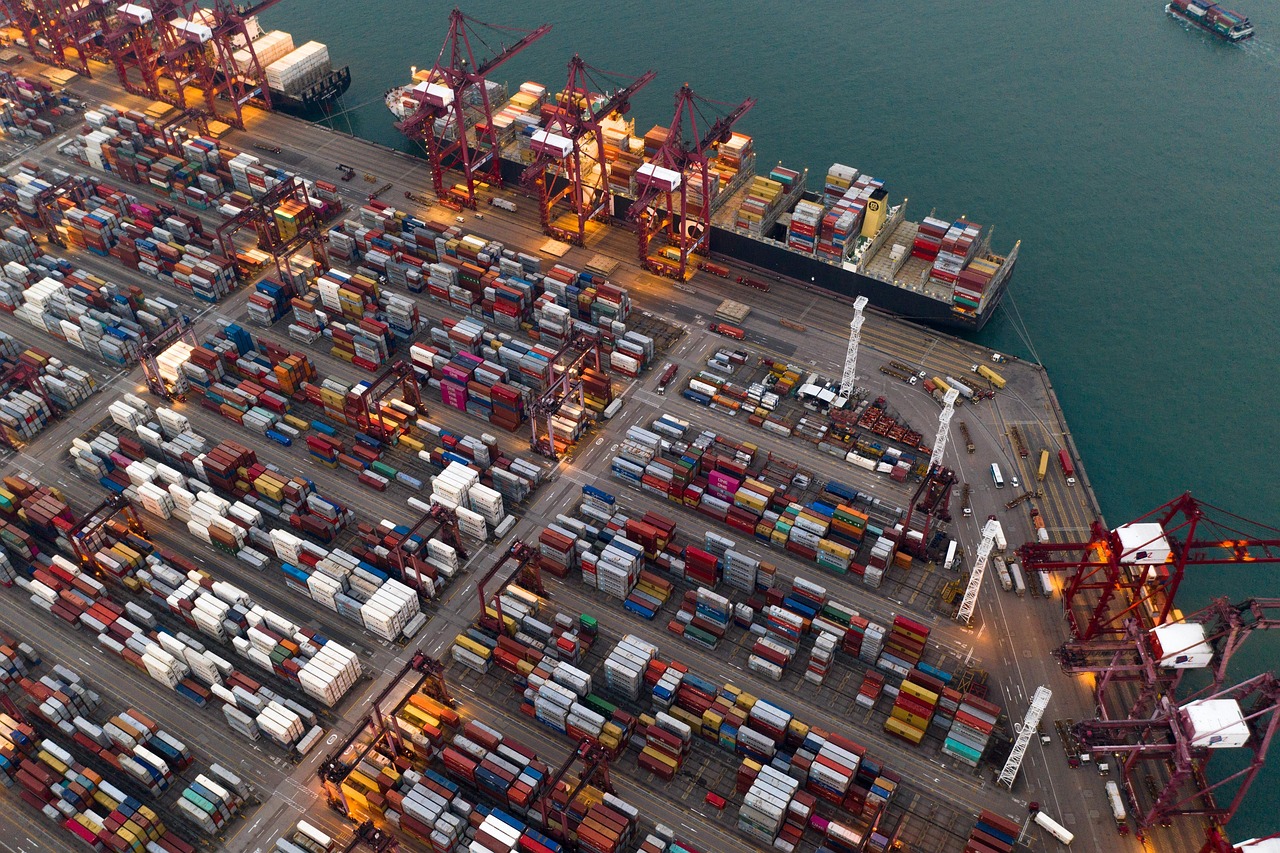
- Some of the major market players no longer rely solely on traditional transportation operators.
- They have begun to build their own distribution and delivery networks, utilizing everything from their own infrastructure to models based on independent drivers.
- At the same time, new logistics operators are entering the market and increasing competition.
- And that completely changes the system.
- It also changes customer expectations.
- Today, consumers are accustomed to receiving their orders quickly and efficiently.
- Because there are more suppliers. More deliveries. More packages arriving every day.
- That is why logistics and delivery have become one of the most critical factors in retail.
- If companies don’t regularly review their delivery promises, they risk competing in a market that already operates by different rules.
- It’s like planning a trip with a guidebook from 1983; the city has changed, and many of the hotels and restaurants on the map no longer even exist.

- The invisible charge on the card; where many companies are paying more without realizing it
- There is another type of cost that often goes unnoticed because it isn’t visible in day-to-day operations: payments.
- In physical stores, transactions are usually relatively simple.
- You swipe the card through the card reader and that’s it.
- But in e-commerce, it’s a different story.
- Small errors in configuration or data transmission can cause a company to pay higher-than-necessary fees on every card payment.
- It’s not something that seems like a major problem on a day-to-day basis.
- But when multiplied by thousands or millions of transactions, the impact on profit margins starts to become significant.
- It’s the business equivalent of those small travel charges that seem irrelevant until you see the total on your credit card statement.
- And
- you realize just how much you’re paying for a cup of coffee at the airport.

- Why the most strategic moment of the journey isn’t when it begins, but when it’s reviewed
Something I’d like to share with you is that, for me, January shouldn’t be a month of recovery.
It should be a month for comparison.
Comparing what was planned with what actually happened.
And that’s only possible when small adjustments have been made throughout the year to avoid surprises at the end of the trip.
Because what makes a trip expensive isn’t usually the ticket or the hotel.
That’s usually under control
What really drives up the cost are the small expenses: That coffee. That bottle of water at a tourist spot. That taxi ride for two blocks because you got lost.
Something similar happens in companies.
Those that make this analysis an annual habit have an advantage over the competition:
they learn where the margin is slipping away before the problem becomes structural.

- A final thought before your next trip
The best travelers know something that companies could apply to their cost-optimization strategy:
The success of a trip isn’t measured solely by how it goes, but also by how the details are handled when it’s over.
Because that’s when you really learn.
- In the end, what matters is identifying which small hole the money is leaking out of.And often that hole is easier to plug than it seems.
Thank you for reading this far.
If you found this article helpful, I’d love to hear your thoughts or learn how you manage these costs in your company.
Have a great day!