

- When a trip is well-planned, you hardly notice the shopping involved
- And why we only miss it when it failsThere are trips that aren’t remembered for anything in particular
There were no delays
There were no endless lines
There were no surprises.
Everything fell into place.
And that is precisely why no one thought about the logistics.
Or who had organized it.
Nor about everything that had to go right for it to work out.
We only think about the trip when something goes wrong.
The connecting flight is delayed, the suitcase gets lost, or a traffic jam makes you miss the flight you were already late for.
And the same thing happens with shopping.
When everything works, shopping is invisible.
When something goes wrong, it becomes critical.
And that’s where the conversation about cost optimization begins.

- For years, procurement was invisible because it worked well enough.
For a long time, handling procurement in a large company has been like the system that buys tickets.
It doesn’t design the experience.
It doesn’t consider alternatives.
It simply executes.
You look at the price, compare it, and buy it.
They looked at costs, negotiated with suppliers, signed contracts, and, as long as everything worked, didn’t ask many questions.
Because when the trip goes well, no one asks who organized it.
Because when the trip goes well, no one asks who organized it.
But now the context has changed.
Today, procurement can no longer limit itself to controlling expenses.
- It has become a strategic enabler of business value.I’m not the one saying this.
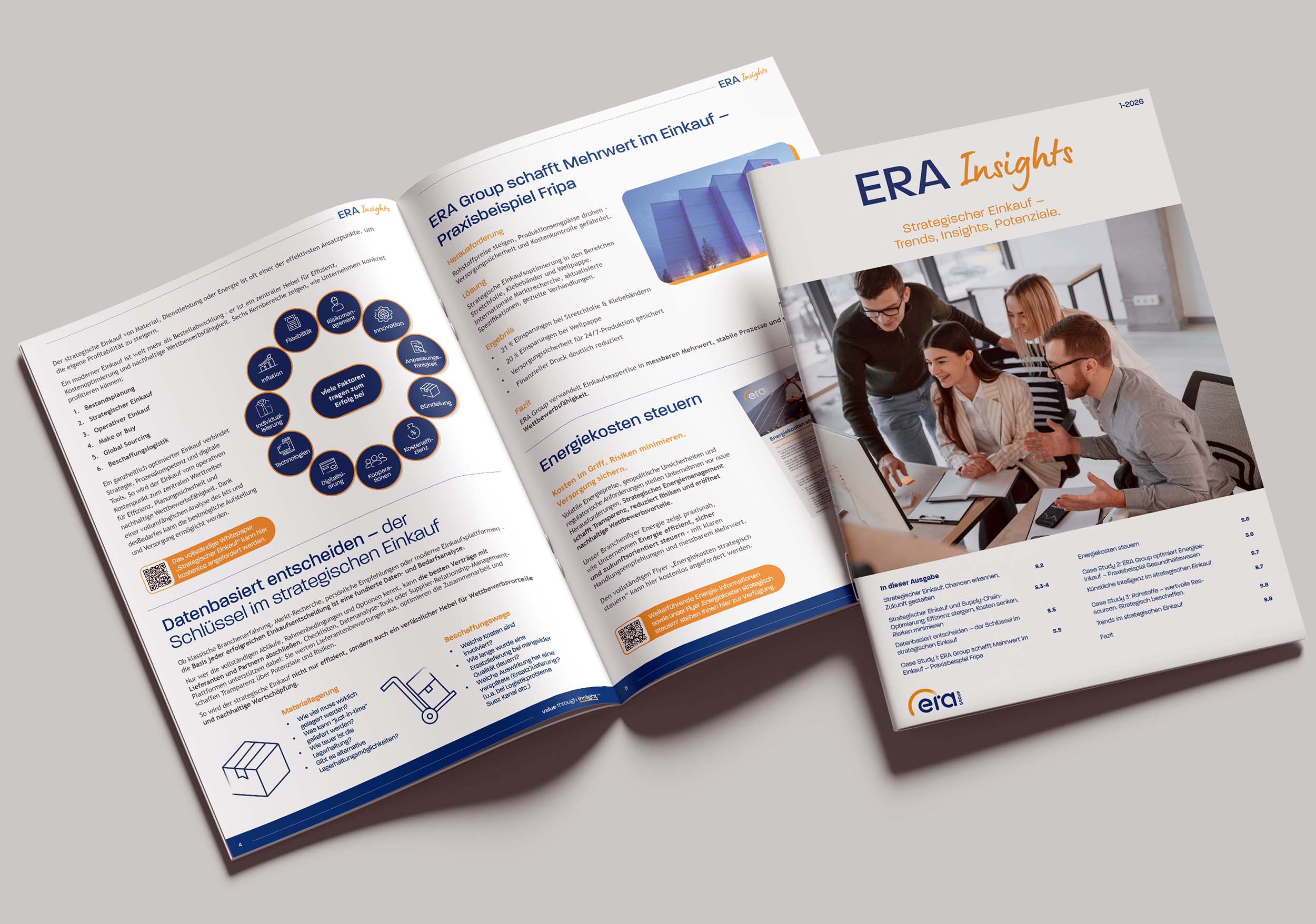
The ERA Group report “The Strategic Power of Procurement: Leading the Next Decade” makes it clear: by 2025, procurement will cease to be a reactive function and become a key component of strategy.
And when the environment changes,
continuing to operate as before
is no longer an option.

- The difference between arriving and arriving well
When traveling, there is an important difference between arriving and arriving well.
You can arrive after three grueling layovers,
exhausted,
with no margin for error,
praying that nothing else goes wrong.
Or you can arrive with time, options, and the ability to react.
In organizations, that difference is called room to maneuver.
Sometimes it’s called resilience, which is a very trendy word that I don’t particularly like, but I think we all understand what it means when it’s missing.
Today, inflation, political uncertainty, and the complexity of supply chains have turned any fragile planning into a constant risk.
This isn’t just perception.
62% of procurement professionals identify inflation as their top concern, far higher than in previous years.
Added to this are long-term contracts coming to an end, increasingly dispersed suppliers, and a shortage of specialized talent.
When the problem is structural, tactical solutions no longer work.
And in travel, as in procurement, improvising once you’re already on the road usually comes at a high cost.

- When price is no longer the focus
When traveling, choosing based solely on price usually has consequences.
Impossible connections.
Endless layovers
and long waits.
Limited ability to react when something goes wrong.
The same thing happens with purchasing.
For years, optimizing costs has been understood as getting the best discount.
But that approach is no longer enough.
- The most advanced organizations are doing something different:
- they renegotiate contracts with a focus on risk, not just price;
- they diversify their supply regions so as not to depend on a single route or country;
- and they use predictive analytics and artificial intelligence to anticipate risks before they materialize
- Because today, it’s no longer about spending less.
- It’s about knowing where you spend, why, and what impact it has.Cost optimization has never been a race for the lowest price.
It has been, and continues to be, a conscious management of impacts, risks, and room for maneuver.
Just like any well-planned journey.
- Digitization isn’t about moving faster; it’s about seeing sooner.Today, no one plans a complex trip without real-time information.
Schedules.
Connections.
Alternatives if something goes wrong.
And yet, many procurement functions still operate with outdated data, manual processes, and reactive decisions.
Digital transformation is no longer about “going faster”
It’s about seeing ahead
Seeing where risks are concentrated.
Seeing which suppliers are starting to fail.
Seeing which decisions have a real impact… and which are just noise.
Organizations with high-performing teams understand this clearly.
That’s why they allocate up to 24% of their budget to technology,
using artificial intelligence to:
- automate repetitive tasks,
- detect fraud,
- and forecast demand with ever-increasing accuracy.
- Technology doesn’t just speed up the journey.
- It allows you to anticipate.
- And when you see ahead, you make better decisions.

- Sustainability: considering whether that route will still exist in the future.
There are routes that work today but will no longer be viable in a few years.
Due to costs.
Due to costs.
Due to regulations.
Due to environmental impact.
It happens with travel. And with shopping, too.
Sustainability is no longer just a reputational requirement; it has become a strategic criterion.
The ERA Group report I mentioned earlier clearly reflects this:
In just two years, the number of organizations with formal sustainability policies has doubled.
And not merely out of isolated ethical conviction.
Because it affects:
- supply continuity,
- cost structure,
- and the ability to compete in certain markets.
- Procurement is at the heart of this change:
- Selecting suppliers,
- Integrating ESG criteria,
- and aligning incentives with real business objectives.
- It is not an isolated ethical decision; it is a decision about continuity that makes the company perform better.
- Procurement doesn’t work without people who understand it.You can have advanced systems.
Well-designed contracts.
Powerful tools.
But if people don’t understand the itinerary, the journey suffers.
In procurement, this is becoming increasingly evident.
Today, mastering the technical side is no longer enough.
The skills that make a difference include:
- digital fluency,
- sustainability awareness,
- strategic vision,
- and the ability to work across disciplines.
- Organizations that invest in talent do not do so to innovate faster.
- They do it so that making mistakes doesn’t cost them as much.
- Because in procurement, every mistake is magnified.
- And the greater the knowledge, the lower the probability of making decisions that derail the journey.

- Optimizing costs also means not missing your flight
- If I had to give you some advice on optimizing costs in the area of purchasing, I would say these are the minimum steps:
- Review contracts with an eye toward risk and inflation;
- reduce unnecessary complexity in the supplier base;
- invest in technology that eliminates errors and friction;
- integrate sustainability as an economic variable;
- and involve procurement in strategic decision-making, not just at the end.
- Because optimizing costs today is about designing a journey
- with room to maneuver,
- with alternatives,
- and without surprises.
- If you want to embark on that journey with more planning and less improvisation, write to me.
- And I’ll send you the full report I mention in this article.
- Thank you for reading this far.
- 𝗙𝗲𝗹𝗶𝘇 𝗱í𝗮.