What the Incas taught me about keeping costs in check at a large company
Or how climbing to over 4,000 meters gave me a very clear perspective on costs
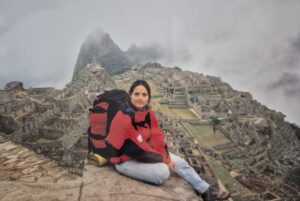
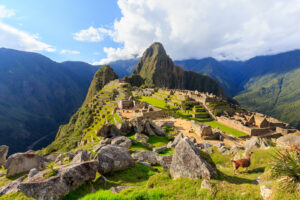
A long time ago, I hiked the Inca Trail. It was four days of walking along an ancient route, between mountains and clouds, until I reached Machu Picchu through the Sun Gate.- It was an incredible journey, but also a real slog. You can do the short or long version; either way, you spend three nights sleeping in tents. But you climb to a very high altitude.
- When you arrive in Cusco, they advise you to drink a certain type of tea or chew some leaves to prevent altitude sickness. And since I always do what I’m told wherever I go, I drank it. A friend of mine decided not to.
- It’s one thing to imagine it from those idyllic photos of ruins shrouded in mist, and quite another to experience it firsthand: sleeping in a tent, walking for hours, carrying all your gear, and, above all, breathing at over 4,000 meters above sea level.
- That trip taught me many things.
- And one of the things I remember is this: you don’t have to carry everything with you to go far. In fact, if you carry too much, you’ll get bogged down.
- Today I’ll tell you why and how this lesson applies to your company’s costs.
Day 1: Enthusiasm Weighs Less Than Your Backpack
When you start the Inca Trail, everything seems wonderful; you’re well-rested, your backpack is packed with the essentials (and a few “just in case” items), and you feel like you can handle anything. - You climb, you descend, you take photos.
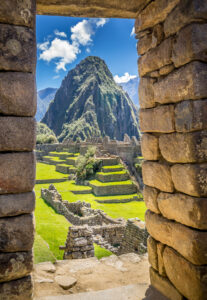
- The scenery leaves you speechless: archaeological ruins everywhere, the high jungle, the rivers. It’s very hard to put into words if you haven’t seen it—it’s something you have to experience.
- It’s as if you’ve stepped into a National Geographic documentary.
- But of course, that’s just the first day.
- Then things change.
- Day 2: The mountain puts you in your place
On the second day, you reach Abra Warmiwañusca, also known as the Pass of the Dead Woman, the highest point of the famous Inca Trail hike to Machu Picchu. - The name gives you an idea: it’s a point that sits at 4,215 meters.
- And that’s where you realize just how heavy your backpack is—not just physically, but mentally as well.
- Every step becomes a challenge.
- And what you’re carrying—that windbreaker “just in case it rains,” that book you wanted to read at camp, that second toiletry bag with things “just in case I need them”—starts to take its toll.
- I couldn’t handle my backpack, so I gave it to a local woman who made a living doing this; she climbed up with my backpack and three others at the same speed a rabbit runs through the woods.
- You’re running out of breath and strength.
- And then you learn to look at everything you’re carrying with fresh eyes.
Day 3: You learn to focus on what matters most
At this point, it’s clear to you: what matters is what you leave behind, not what you carry. - You start to refine your choices and ask yourself: Do I need this? Can I live without that?
- And you also look around you.
- At those who carry the load with you, those who go more slowly, those who can barely carry their own weight, those who help without being asked.
- You realize that moving forward is a matter of balance, not competition. It has a lot to do with the pace and the group you’re climbing with.
- And, above all, with focus.
Day 4: Reaching Machu Picchu with Less
When you arrive at Intipunku, the Gate of the Sun, something tightens inside you. The sight fills you with an indescribable emotion: you’ve done it, you’ve made it! You see Machu Picchu before it opens, at sunrise. - And you realize something: You didn’t need as many things as you thought.
- What made it possible for me to get there was:
- Traveling light.
- Taking my energy seriously.
- Listening to my body.
- And trusting the route.And then, after so many miles, I understood that what really makes sense on a journey like this is to choose wisely in order to be efficient. Just as I couldn’t handle the backpack, sometimes costs weigh us down too much in our company.
- The friend who didn’t have tea got terrible altitude sickness, and we all had to carry her.
- What I learned from the Qhapaq Ñan, the Inca Trail that took me to Machu Picchu
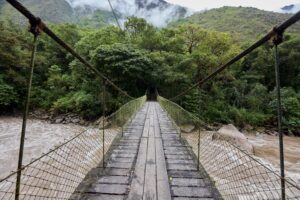
That network of trails connecting the entire Inca Empire wasn’t a luxury—it was a necessity. - A structure designed to operate with just enough resources and transport people, food, messages, and pack llamas as efficiently as possible.
- And when you study the history a bit more, you see that the key to its operation was this: optimizing effort without losing sight of the purpose.
And what does this have to do with costs?
Much more than it seems. - Because sometimes in companies we do exactly the opposite of what I learned on the mountain: we carry too much or we don’t prepare ourselves, like when you don’t take what the locals tell you to avoid altitude sickness.
- We have cost lines we haven’t reviewed in years, or legacy systems, or agreements that no longer make sense.
- We pay for structures that don’t serve the real purpose.
- And we also struggle to see what’s invisible:
- Equipment wear and tear.
- The energy wasted on repetitive tasks.
- Processes that could be simpler.
- Suppliers who are no longer aligned.Three Lessons from the Inca Trail You Can Apply to Your Business
Here’s what this story teaches you about the steps to start optimizing costs: - 1. Acclimate Before You Climb
- Before making important decisions, take the time to fully understand the context.
- Just like on the Inca Trail, where you need a few days to acclimate to the altitude and take certain precautions, you also need to prepare before making changes to your costs.
- 2. Check your backpack
- Take stock of everything you’re carrying.
- What still makes sense? What do you never use? What weighs too much for the value it provides?
- 3. Travel with less, but better
- Optimizing almost never means cutting back, but rather moving forward wisely with just enough.
- And “just enough” isn’t the bare minimum, but rather what’s necessary to reach your destination safely. And if you can’t make it on your own, lean on someone who knows the terrain, just as I did with the woman who carried my backpack up to Paso de la Mujer Muerta.
Sometimes you need a bird’s-eye view of your own path
I can’t walk the Inca Trail for you. - But if you need to look at your expenses from a different perspective, sometimes you need someone who’s already been there.
- Someone who understands that efficiency isn’t about cutting corners, but about knowing where you’re going and what you need to bring with you. Just reach out to me
- Have you ever taken a trip that taught you something you use in your work today?
- Thanks for reading.
- That’s all for today. I hope these ideas are helpful to you.
- Have a great day