KM: Dear Mr Köhler, Berliner Seilfabrik, founded in 1865, develops and manufactures customised play structures that delight children on every continent. What began as a complex piece of play equipment rope has grown into an extensive range of spatial net constructions that you tailor to each customer's requirements. You sell your products in Germany, other European countries, North America, Australia and the Arab world. You recently opened a new branch in the USA. How is purchasing structured in such a rapidly expanding company?
Köhler: We do not have our own production facilities in the USA, but concentrate these at our headquarters in Berlin. That is why the purchasing function is also located here and reports directly to the management. We strive for long-term supplier relationships and usually conclude framework agreements, such as for steel purchasing, from which we call off the quantities we need. In recent years, we have very successfully expanded our business activities and enlarged our Berlin location with a new building. However, due to the size of our company, we do not distinguish between the purchasing of strategic and non-strategic products.
KM: Who is responsible for purchasing overheads at your company?
Köhler: Our purchasing department consists of two people. It is responsible for all areas, including overheads. The main task is to optimally organise the purchasing processes and select suppliers for our core products. This does not leave much capacity for overheads.
KM: You brought in external support to optimise your cost structure in the area of overheads. Why did you decide to take this step and how did the initial contact come about?
Köhler: The first step was taken by ERA Group; we weren't focusing on the issue of overhead cost optimisation. When Mr Schlake presented the business concept to us in mid-2009, we found the approach coherent and convincing. We were particularly interested in the performance-related remuneration based on realised savings and the support provided by ERA Group over a longer period of time. Another motive was our decision to have our established practices reviewed by an external party. We were prepared to break down structures, dig a little deeper in some areas and implement changes.
KM: With external support, you examined courier services, freight, printing costs and packaging. How did these projects go and how satisfied are you with the results?
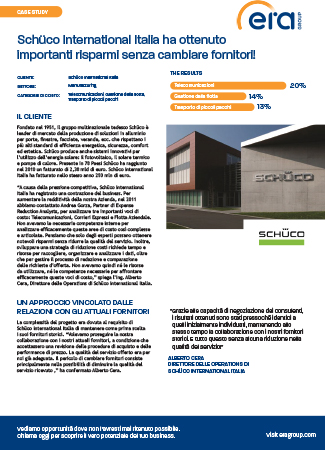
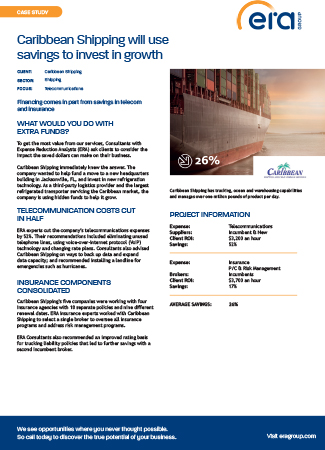
Köhler: The phase of support from ERA Group is coming to an end in the next few months, so it's time to take stock. I am very satisfied with the results of the collaboration and an average total saving of more than 30%. As things stand today, we will save a total of around €145,000, albeit less than planned. Structural changes in our company, such as our branch in the USA, led to a decline in consumption in some categories. In some areas, we had to recognise that it was not possible to measure savings as planned. And, of course, our purchasing department critically monitored the implementation period. Ultimately, it is important for me to note that the collaboration with ERA Group was always cooperative and fair, even during controversial discussions. With ERA Group's support, including competent cost experts and professional customer service, we felt well advised over the two years.
KM: According to a study by ERA Group and EBS Business School, it is important to secure identified savings potential in the long term. How do you ensure that the savings actually reach you?
Köhler: It is our goal to continue using the purchasing sources even after the support phase by ERA Group, as we will ultimately benefit from the savings alone in the future. I can also imagine asking ERA Group to take another critical look at our purchasing situation after a phase of one or two years. However, another approach that we have already discussed with Mr Schlake might make more sense. ERA Group has signalled its willingness to carry out and document invoice controlling and the measurement of savings for us on a fee basis instead of on a success basis in future. Through our long-term partnership with ERA Group, we could ensure, in a resource-efficient manner, that the advantages in the categories examined are maintained in the long term and do not fall victim to day-to-day business after a short time. And who knows, perhaps there are other cost areas that we have not yet considered.