- The delay isn't the problem. The problem is how you use that time.
- Some people just stare at the departure board, while others leave the airport.There are small moments that say more about us than they seem.
Like when your flight is delayed.
You look at the departure board.
At first, patiently. Then with a certain amount of tension.
At first, nothing happens. “It’s only twenty minutes.”
Then half an hour.
An hour.
And time begins to feel different.
Some get up again and again to look at the screen. Others complain. Others resign themselves and wait.
And there are those who do something different.
Because the delay, in itself, isn’t the problem. The problem is what you do with that time.
And that, even if it doesn’t seem like it, says a lot about how you make decisions. And about how your company makes decisions when things don’t go as planned.
Something very similar is happening in companies with the economy and costs.
Give me a few minutes and I’ll explain.

- Delay as a mirror of how we manage uncertainty
- From the outside, the story is always the same: uncertainty, shocks, moments that change the course of history.
- With everything that has happened since January 1st, I’m not telling you anything new.
- And yet, according to a study by ERA Group, the global economy has held up much better than almost anyone expected.
- The predicted recession did not materialize.
- Employment has remained at historically high levels.
- And despite pandemics, wars, and trade tensions, planes are still flying.
- That doesn’t mean the journey is comfortable; it means a delay isn’t a cancellation.
- We often find ourselves in a transitional period. An uncomfortable space where action is still possible.
- But not everyone does.
- Some wait until they have all the information. Others hope the context will improve. Others postpone because “now is not the time.”
- And so, the delay gradually eats away at the margin.
- And that’s where many companies go wrong: they confuse not knowing the exact arrival time with being lost.
- The problem isn’t the delay; it’s not knowing what to do in the meantime.At an airport, a delay becomes unbearable when you have no information.
Because we don’t like uncertainty.
And even less so when we’ve paid for a hotel for seven days and lose one because of an unforeseen event.
We can’t do anything about the delay, but we can decide what to do in the meantime: go out, wait, or change our plans.
Something very similar is happening in today’s economy.
The ERA study identifies clear risks.
- They aren’t new, but they are more visible:
- declining populations in Europe and China,
- pressure on public debt,
- demanding financial markets,
- and an increasingly unstable geopolitical landscape.
- None of this happens overnight.
- Nor will it explode tomorrow.
- It is a long delay, announced well in advance.
- And yet, many organizations continue to behave as if the flight were to depart in five minutes.
- Demographics: When the Boarding Gate Runs Out of PassengersSome airports are crowded, while others have fewer and fewer people waiting.
This means those airports stop operating flights in the winter and, in the summer, only serve the busiest routes.
The same thing is happening with the working-age population.
Europe and China have reached a point where their populations are beginning to shrink or age rapidly, while other regions continue to grow.
According to ERA’s analysis, much of Europe’s employment growth already depends on migration. Without it, there would not be enough people to fill the jobs.
For a CEO or CFO, this is not a sociological observation.
It is an operational variable
That influences where you invest, where you produce, and where you hire.
Ignoring this structural change is like planning an airline route without checking whether there are enough passengers to sustain it.

- Technology: It’s Not a Direct Flight, It’s a Potential Fast TrackEvery so often, the promise of the “direct flight.” The technology that is supposedly going to change everything.
Something similar is happening with artificial intelligence.
The ERA Group study shows positive signs, especially in the United States, where productivity has begun to grow above 2% after
The ERA Group study shows positive signs, especially in the United States, where productivity has begun to grow by more than 2% after years of stagnation.
In Europe, however, the impact has been much more uneven.
There is a reality that is hard to deny: AI can shorten the journey, but it doesn’t do so automatically.
It is not a guaranteed shortcut. It is an infrastructure that must be used wisely.
And, above all, it’s not wise to build financial plans as if the journey were a miracle.
AI can help when you understand everything it can bring to your business.
- Markets and debt: when tickets were cheap for too longFor years, flying was cheap. Low-cost carriers boomed, and travel became accessible to everyone.
Something similar happened in business and the economy: low interest rates, abundant capital, manageable debt.
Governments and companies grew accustomed to that era.
Now the context is different.
Rates have risen, markets are more demanding, and valuations reflect an optimism that, at the very least, calls for caution.
The study notes that the debt problem is not immediate, but it is cumulative.
It’s not the flight that gets canceled today; it’s the one that, in a few years, will require you to pay more and more for having booked without thinking.
For companies, this translates to less reliance on optimistic assumptions and greater discipline in investment, costs, and financial structure.
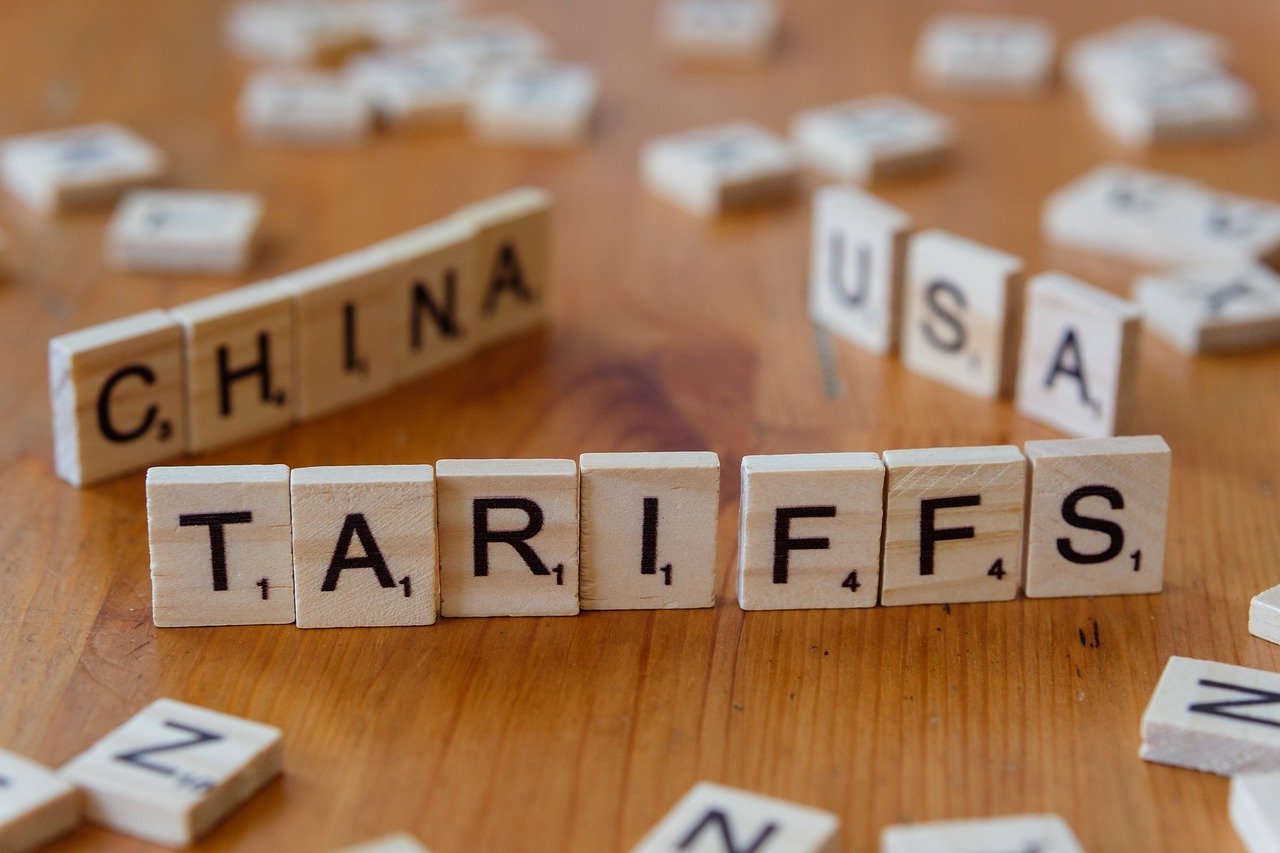
- Tariffs and Geopolitics: Constant Shifts in the Playing Field
One of the most difficult elements to manage is not so much the cost, but the lack of a stable framework.
Frequent changes in tariffs.
Political decisions that are difficult to anticipate.
An international order that no longer functions as it once did.
It’s like when they change your gate and you’re no longer even sure if you’re in the right terminal.
And in business, there is no clear new standard.
What there is, is the need to continually adapt.
The problem isn’t the change itself.
The problem
- is not having the leeway to adapt.
- The famous “resilience”This is where the buzzword usually comes in: resilience.
Put that way, it sounds like it means putting up with everything with a smile, as if you were the star of a motivational poster.
But it’s not about resigning yourself to it.
It’s about not getting stuck staring at the dashboard.
The study points to something more interesting:
The economy has survived many shocks because companies and governments adjusted their decisions, prioritized, and shifted resources.
Resilience isn’t about enduring.
It’s about acting on information and seizing the moment so that, with the tools you have, the waiting time isn’t wasted.
- Planning for delays is part of the journeyWhen you know your flight is delayed, the smart thing to do isn’t to get even more upset.
It’s deciding:
- Do I leave the airport or stay?
- Do I change my route or wait?
- Do I make the most of my time or waste it?
- For a company, today that means:
- Don’t paralyze decision-making out of fear of the current context.
- Don’t overreact to every headline.
- And don’t ignore structural changes by focusing solely on the short term.
- Because, in the end, leaders who combine short-term prudence with action on fundamental changes are the ones who are best positioned when the flight finally takes off.

- Cost optimization is about making better use of time.
From this perspective, cost optimization isn't about cutting back.
It’s about seizing the moment, even when it seems bad for business.
Seen this way, optimizing costs involves:
- Reviewing structures with less favorable scenarios in mind.
- Investing in technology that delivers real returns, not just promises.
- Aligning operations with demographic and geographic realities.
- Avoiding financial commitments based on unrealistic assumptions.
- And making decisions before the delay becomes an emergency.
- Because the delay is already here.
- The difference isn’t in who complains the most, but in who leaves the airport, makes the most of their time, and returns with a buffer.
- And when the flight finally boards, it becomes clear who understood the journey and who spent hours staring at the departure board, waiting for someone else to decide for them.
- If you want to take control and seize the moment to optimize your company’s costs, just reach out to me.
- Thank you for reading this far.
- 𝗙𝗲𝗹𝗶𝘇 𝗱í𝗮.